
 +91 99983 82015
 sales@pathframe.com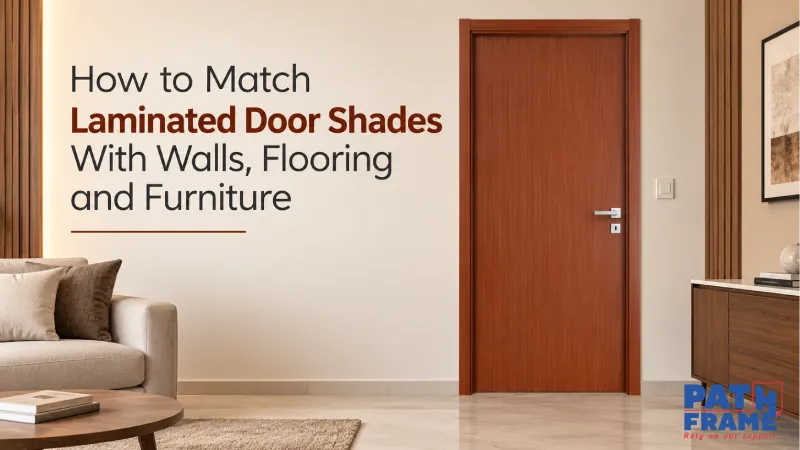
Key Takeaways
- Start by establishing the main interior palette to ensure door shades complement walls, flooring, and furniture.
- Coordinating laminated door shades with wall colours enhances visual harmony in any interior design project.
- Consider the tone of flooring when selecting a door shade for a well-rounded appearance.
- Furniture finishes can refine your door shade choice, promoting a cohesive design across the space.
- When selecting finishes from a Laminated Door Shades Manufacturer in India, prioritize visual balance over exact matches.
Pathframe Industries is a leading manufacturer of laminated door shades for residential, commercial, hospitality and institutional interiors.
A door is a visible part of the interior, so its shade should work naturally with the walls, flooring and furniture around it. When selecting finishes from a Laminated Door Shades Manufacturer in India, the goal should not be to match every surface exactly, but to create a balanced and coordinated interior.
Start With the Main Interior Palette
Before selecting the door shade, look at the colours already established in the space.
Walls usually create the main background, while flooring and large furniture pieces form the supporting palette. Once these three elements are clear, it becomes easier to decide whether the door should blend into the interior or create a controlled contrast.
The door shade should support the overall design rather than compete with it.
Coordinate the Door with Wall Colours
Wall colour is usually the strongest reference point because it surrounds the doorway.
Light or neutral walls can work with both subtle and darker laminated door shades. A closer match creates a softer, continuous look, while a deeper shade can make the doorway more defined.
For stronger wall colours, focus on compatible undertones rather than trying to find an identical shade. Reviewing the actual door sample against the selected wall finish is more useful than making the decision from a digital image alone.
Match the Door Shade with the Flooring
Flooring can help determine whether a warmer, cooler or more neutral door finish will suit the room.
Wood-look floors may coordinate well with related grain tones, while stone, tile or neutral commercial flooring can allow greater freedom in door selection. An exact match is not necessary; in many interiors, a slight contrast creates a more balanced result.
When choosing from a Laminated Door Shades Manufacturer in India, consider how the door and flooring will appear together across the entire room rather than evaluating each finish separately.
Coordinate the Door Shade with Furniture
Furniture should refine the shade decision, not restart it.
Wardrobes, cabinets, desks, headboards and built-in furniture may already introduce strong wood grains or colours. The laminated door can either complement these finishes or provide a deliberate contrast.
A simple rule works well:
- Use a similar tone for a calm, coordinated interior.
- Choose a related warm or cool shade for subtle variation.
- Use contrast when the design needs the door to stand out.
For repeated room layouts, keep the selected approach consistent.
Review Shade and Texture Together
Colour alone does not determine how a laminated door will look. Texture and grain can change the character of the same shade significantly.
Pathframe Industries offers several FL-series laminated shade options, including FL-30, FL-31, FL-10, FL-60, FL-100, FL-120, FL-121 and FL-130.
This gives project teams the flexibility to compare different finishes according to the overall interior concept. Working with a Laminated Door Shades Manufacturer in India that offers multiple options can make it easier to coordinate doors with different design schemes.
Check the Shade Under Actual Lighting
Lighting can change how a laminate appears.
A finish viewed in daylight may look different under warm hotel lighting or cooler office lighting. For this reason, samples should ideally be reviewed with the selected wall, floor and furniture finishes under lighting similar to the actual project.
Before approval, check:
- Wall colour
- Flooring tone
- Main furniture finish
- Door texture
- Natural and artificial lighting
- Required level of contrast
A short review at this stage can prevent an otherwise good finish from looking out of place after installation.
Keep Large Projects Visually Consistent
Hotels, apartment developments, office buildings and institutional projects often repeat the same door design across multiple rooms.
Instead of selecting shades room by room, create an approved finish combination for each recurring space type. This makes it easier for design, procurement and execution teams to follow one clear specification.
For large projects, consistency usually creates a stronger visual identity than using too many unrelated door finishes.
Pathframe Laminated Door Shades Across Major Indian Cities
We support laminated door requirements for projects across Thiruvananthapuram, Kochi, Kozhikode, Kollam, Thrissur, Kannur, Bhubaneswar, Hyderabad, Bangalore, Chennai, Visakhapatnam, Coimbatore, Mysuru and Madurai, along with Ahmedabad.
For buyers evaluating a Laminated Door Shades Manufacturer in India, the final shade should always be selected according to the project's interior palette, room type and design intent rather than city alone.
Why Choose Pathframe Industries?
we offer a varied selection of laminated door shades for modern project interiors. Our focus is on giving design and project teams practical finish choices that can be coordinated with different interior concepts. With multiple shade and texture options available, clients can shortlist finishes that complement the visual character of their project while maintaining consistency across repeated door requirements.
Conclusion
Matching laminated doors with walls, flooring and furniture is mainly about creating visual balance. Start with the dominant interior palette, use flooring to guide the tone, let furniture refine the choice and always review the final combination under actual lighting.
A well-selected door shade can connect the different finishes in a room without making every surface look the same. For projects requiring coordinated laminated door finishes, Pathframe Industries offers options suited to contemporary residential, hospitality, commercial and institutional interiors.
Planning a project and finalising laminated door finishes?
Contact Pathframe Industries to explore suitable shades and discuss your project requirements.
Connect with our team to explore laminated door shades for your upcoming project.
Call: +91 99983 82015
Email: sales@pathframe.com